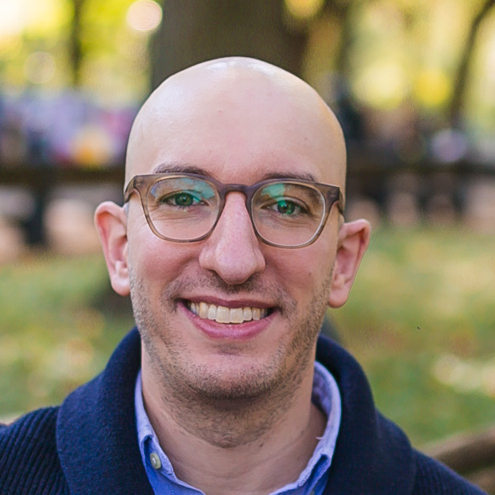
I’m an art critic, author of two books, The Way Things Go (punctum books, 2023) and Exercises in Criticism (Dalkey Archive, 2015), and Professor of English at Hostos Community College, CUNY. Before joining Hostos, I was a Language Lecturer in NYU’s Expository Writing Program and before that an Adjunct Lecturer in the CUNY system and a professional online poker player.
In fall 2026 and winter 2027, I’ll be working on a project in which I interview digital artists about their work and write articles based on what I’m learning as a critic who until recently focused on analog art. The interviews will be published biweekly on my Substack, How to Look at Digital Art, and the articles will be published as a monthly column in Outland.
Prior to this project, my art writing focused on artists who address climate change and ecology. I’m also interested in artist-run initiatives conceived as aesthetic or economic alternatives to the business-as-usual art world. I’ve contributed features, reviews, and interviews to magazines such as Frieze, The Brooklyn Rail, Hyperallergic, BOMB, New York Review of Architecture, The Art Newspaper, ArtReview, and Art in America. When I was writing more regularly about books, I contributed to places such as Bookforum, The Believer, The Los Angeles Review of Books, and Boston Review.
I’ve also published two books of creative nonfiction inspired by the French OuLiPo group.
My most recent book, The Way Things Go, contains a mix of poetry, art writing, and life writing about anticipatory grief, or mourning someone or something before it’s gone. Each successive chapter in the book decreases in length by exactly one sentence (a book-length Oulipian “melting snowball”), from a 71 sentence-long opening chapter, to a 70 sentence second chapter, to 69 sentences, 68 sentences, and so on down to 1.
My first book, Exercises in Criticism, uses various procedures (a chapter written entirely in interrogatives; a recorded and edited transcription of my Ph.D. dissertation defense) to write poetic and autobiographical criticism about OuLiPo’s English-language legacy. It was named to Entropy Magazine’s “Best of 2015: Non-Fiction” list.